Steam Flow Meter Types & Selection Guide
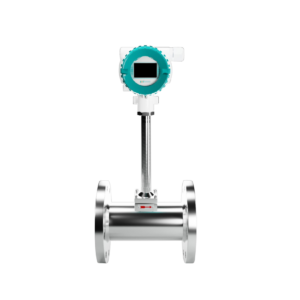
Vortex Flowmeter

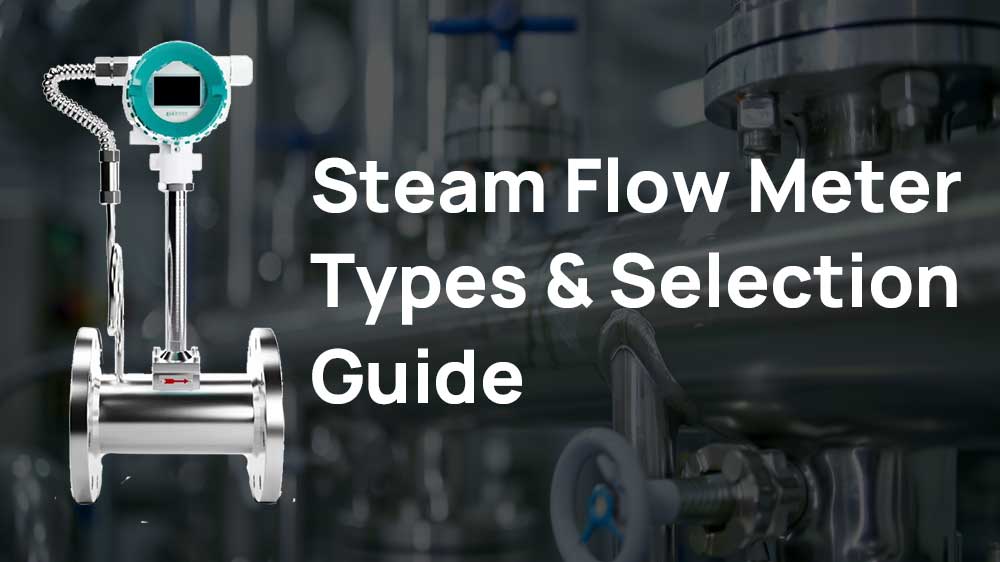
Steam is one of the most widely used energy carriers in industrial processes, including power generation, chemical production, food processing, and heating systems. Accurate steam flow measurement is essential for energy efficiency, cost control, and process safety.
However, selecting the right steam flow meter is not always simple. Steam is a compressible medium, and its density changes significantly with pressure and temperature. Therefore, choosing the correct measurement technology and installation method is critical for stable long-term performance.
This guide introduces the main types of steam flow meters and provides practical selection recommendations for industrial applications.
1. Key Challenges in Steam Flow Measurement
Compared with liquid measurement, steam introduces several difficulties:
- Steam density varies with pressure and temperature
- Wet steam can affect measurement stability
- High temperature requires robust sensor design
- Pipeline installation conditions strongly influence accuracy
- Energy loss must be minimized in most systems
Because of these factors, not all flow meters are suitable for steam service.
2. Main Types of Steam Flow Meters
2.1 Vortex Flow Meter (Most Common Solution)
Vortex flow meters are widely used in steam applications due to their simple structure and strong reliability. They operate based on the Kármán vortex principle, where vortices are generated behind a bluff body in the flow stream. The frequency of these vortices is proportional to flow velocity.
This technology is especially suitable for both saturated and superheated steam.
Advantages:
- No moving parts → low maintenance
- Good stability under high temperature conditions
- Suitable for mass flow measurement (with compensation)
- Cost-effective compared with high-precision alternatives
Limitations:
- Requires minimum flow velocity for stable signal
- Sensitive to vibration and wet steam conditions
- Needs proper straight pipe installation
Vortex meters are widely used in boiler steam lines, energy monitoring, and industrial heating systems.
2.2 Differential Pressure (DP) Flow Meters
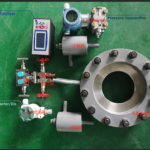
DP flow measurement is one of the oldest and most established technologies. It uses a restriction element (such as an orifice plate or Venturi tube) to generate a pressure difference proportional to flow rate.
Advantages:
- Proven long-term industrial use
- Suitable for high pressure and temperature steam
- Works across a wide range of pipe sizes
Limitations:
- High permanent pressure loss
- Limited turndown ratio
- Requires impulse piping and regular maintenance
- Installation is more complex
Commonly used in large-scale power plants and process industries where accuracy and reliability are prioritized over simplicity.
2.3 Insertion Type Flow Meters
Insertion-type vortex meters are designed for large-diameter pipelines where full-bore installation is difficult or expensive.
Advantages:
- Can be installed without shutting down the process
- Cost-effective for large pipe sizes
- Flexible installation options
Limitations:
- Slightly lower accuracy compared to inline types
- Requires careful positioning for reliable results
- More sensitive to flow profile conditions
2.4 Other Technologies
Thermal mass flow meters
- Suitable for gas but not recommended for wet steam
Ultrasonic flow meters
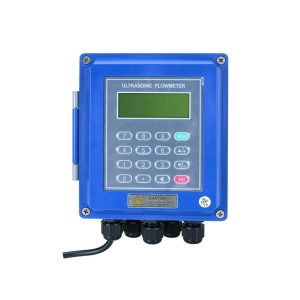
- Mainly used for liquid or condensate systems, not direct steam
Coriolis flow meters
- Extremely high accuracy but very expensive
- Typically used in high-value or custody transfer applications
3. How to Select the Right Steam Flow Meter
When choosing a steam flow meter, consider the following key factors:
Steam Condition
- Saturated steam → vortex or DP recommended
- Superheated steam → vortex or Coriolis possible
Accuracy Requirement
- ±1–2% → vortex or DP systems
- High precision → Coriolis
Pressure & Temperature
- Higher pressure requires stronger materials and compensation capability
Installation Conditions
- Limited space → insertion type preferred
- Long straight pipe available → vortex or DP
Maintenance Requirement
- Low maintenance → vortex preferred
- Regular calibration allowed → DP acceptable
4. Best Practices for Installation
To ensure stable and accurate steam measurement:
- Maintain sufficient straight pipe length upstream and downstream
- Install steam traps to remove condensate
- Ensure steam dryness above 95%
- Avoid installing sensors at low points where water may accumulate
- Do not insulate transmitter housing
- Ensure proper grounding and vibration protection
Poor installation is one of the most common causes of inaccurate steam flow readings.
5. Summary
Steam flow measurement requires a balance between accuracy, reliability, and operational cost. Among available technologies:
- Vortex flow meters are the most widely used solution for general industrial steam measurement
- DP flow meters remain the standard for large-scale and high-pressure systems
- Insertion types offer flexibility for large pipelines and retrofit projects
The correct selection depends on steam conditions, accuracy requirements, and installation environment.
Conclusion
A properly selected steam flow meter not only improves measurement accuracy but also helps optimize energy usage and reduce operational costs. Understanding the strengths and limitations of each technology is essential for achieving reliable long-term performance in industrial steam systems.
lrene
Sales manager
Hello, I’m Irene Wang, an international sales representative specializing in flow measurement instruments.I support global customers with product selection, technical information, and project quotations. Feel free to contact me for any flow meter inquiries.