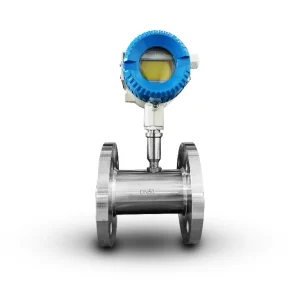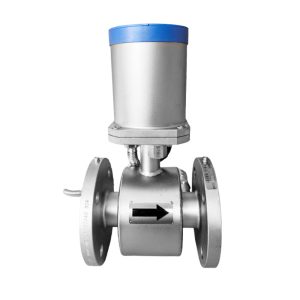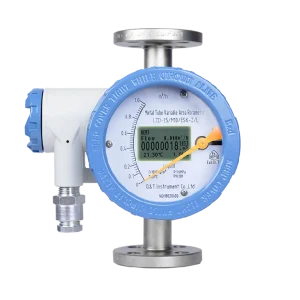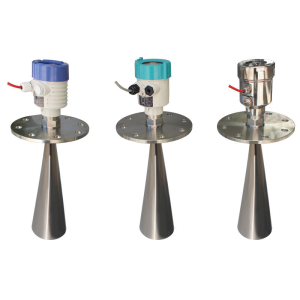
Liquid Turbine Flow Meter: Selection Guide, Features & Applications

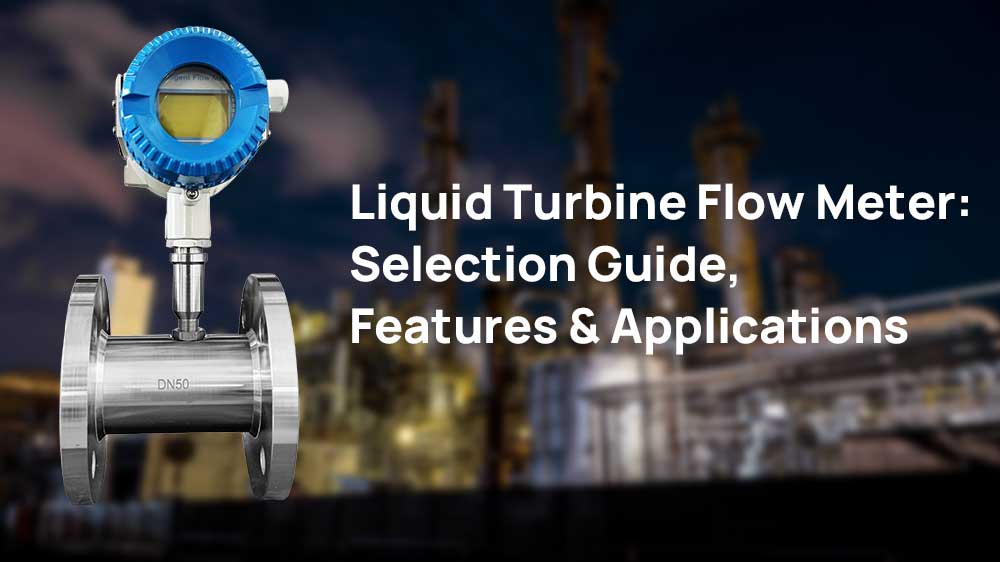
Liquid turbine flow meter are one of the most mature and widely used technologies for industrial liquid measurement. With high accuracy, fast response, and excellent repeatability, they are commonly applied in water, chemicals, light oils, and low-viscosity liquid monitoring.
In energy management, process control, and cost accounting, selecting the right turbine flow meter directly impacts not only measurement accuracy but also long-term system reliability.
This guide introduces the working principle, key features, and selection criteria for liquid turbine flow meters, helping engineers make informed decisions in real-world projects.
1. Working Principle of Liquid Turbine Flow Meters
Liquid turbine flow meters operate on the principle of fluid momentum. As liquid passes through the pipeline, it strikes the turbine blades, causing the rotor to rotate. The rotational speed is proportional to the flow velocity. A magnetic or inductive sensor converts the rotation into electrical pulses, which are then processed by an instrument or transmitter to display instantaneous flow rate and totalized flow.
Key components include:
- Turbine rotor (precision machined)
- Flow straightener / guide vanes
- Bearing system (wear-resistant, low friction)
- Signal pickup sensor (Hall effect, electromagnetic, or inductive)
2. Key Features & Advantages
Key Features:
- Media: Clean, low-viscosity liquids (water, DI water, light oils, solvents, chemicals, etc.)
- Accuracy: ±0.5% ~ ±1.0% (optional ±0.2% for high-precision applications)
- Repeatability: ≤0.1%
- Turndown ratio: 10:1 (extendable to 20:1)
- Output signals: Pulse, 4–20mA, RS485/Modbus
- Medium temperature: -20°C ~ +120°C (high-temp version up to +180°C)
- Pipe size (DN): DN4 ~ DN300 (insertion type available for larger diameters)
Core Advantages:
- High accuracy and repeatability – ideal for process control and custody transfer
- Fast response time – suitable for fluctuating flow conditions
- Compact and lightweight – easy to install and maintain
- Low pressure loss – more energy-efficient than positive displacement or DP meters
- Cost-effective – excellent value for moderate to high accuracy requirements
- Flexible output options – compatible with PLC, DCS, and SCADA systems
3. Typical Media & Applications
Suitable media:
- Clean water, softened water, deionized water
- Diesel, gasoline, light fuel oil
- Solvents, alcohol, ethylene glycol
- Chemical reagents, coolants, low-viscosity lubricants
⚠️ Not recommended for high-viscosity liquids (e.g., heavy oil, slurry), or media containing solids or bubbles.
Typical applications:
| Industry | Application |
|---|---|
| Water treatment | Raw water, treated water monitoring |
| Chemical | Additive dosing, solvent metering |
| Food & beverage | Process water, cleaning solution monitoring |
| Pharmaceutical | Purified water, WFI distribution systems |
| Energy | Cooling water, heat exchange systems |
| Manufacturing | Coolant, cutting fluid monitoring |
4. How to Select the Right Liquid Turbine Flow Meter
Proper selection is critical for long-term stable performance. Follow these steps:
4.1 Determine media characteristics
- Cleanliness: Are particles or bubbles present?
- Viscosity: Recommended ≤ 5 cSt (low to medium viscosity)
- Chemical compatibility: Are rotor and bearing materials corrosion-resistant?
4.2 Determine flow range
- Select pipe size based on max, normal, and min flow rates
- Best accuracy is achieved within 30%–80% of full scale
4.3 Determine accuracy requirement
- General industrial control: ±1.0%
- Internal accounting or energy monitoring: ±0.5%
- Custody transfer or batch control: ±0.2% (requires calibration)
4.4 Determine installation conditions
- Upstream straight pipe ≥ 10D, downstream ≥ 5D
- Avoid installation near pump outlets, elbows, or valves
- Install a strainer/filter upstream to protect the rotor
4.5 Output and communication
- Pulse signal: for flow totalizers or PLC counting
- 4–20mA: for remote monitoring
- RS485/Modbus: for digital system integration
🛠️ 5. Installation Best Practices
To ensure long-term stability and accuracy:
- ✅ Install a strainer or filter (≥100 mesh) upstream
- ✅ Ensure sufficient straight pipe length
- ✅ For vertical installation, flow should go upward
- ✅ Slowly fill the pipe on first use to avoid rotor impact
- ✅ Clean rotor and bearings periodically (especially with poor water quality)
- ❌ Never run dry or operate with two-phase flow
- ❌ Never exceed maximum allowable flow rate
Most common failure causes: dirty media, improper installation, or over-range operation.
6. Comparison with Other Liquid Flow Meters
| Type | Accuracy | Pressure Loss | Suitable Media | Maintenance |
|---|---|---|---|---|
| Turbine | High | Low | Clean, low-viscosity liquids | Medium |
| Magnetic | Medium–High | None | Conductive liquids | Low |
| Ultrasonic | Medium | None | Clean liquids | Low |
| Oval Gear | High | High | High-viscosity liquids | Medium |
For clean, low-viscosity liquids requiring high accuracy, the turbine flow meter offers the best cost-performance ratio.
7. Summary
Liquid turbine flow meters are a proven, reliable solution for industrial liquid measurement, offering high accuracy, fast response, and compact design.
Key selection considerations:
- Media is clean and low-viscosity
- Flow range matches pipe size
- Installation meets straight-pipe requirements
- Output signal is compatible with existing control systems
Correct selection + proper installation + regular maintenance = long-term stable and reliable liquid flow measurement.
Conclusion
Whether in water treatment, chemical processing, pharmaceuticals, or energy management, liquid turbine flow meters provide accurate and cost-effective flow measurement. Understanding their working principle and selection guidelines is essential for improving process control and energy efficiency.
For model recommendations or technical support, please contact us for professional selection assistance.
kaley
Sales manager
Do you have a specific fluid you are struggling to measure?Leave a comment below with your application details,and I will help you choose the right materials.