Electromagnetic Flow Meters Explained: Working Principles & Industrial Applications

Introduction: The Unseen Workhorse of Flow Measurement
In modern industrial processes, accurate liquid flow measurement is critical to efficiency, cost control, and compliance. In harsh conditions—such as raw sewage, abrasive slurries, or corrosive chemicals—traditional flow meters often suffer from clogging, wear, or pressure loss, leading to unstable readings and unplanned downtime.
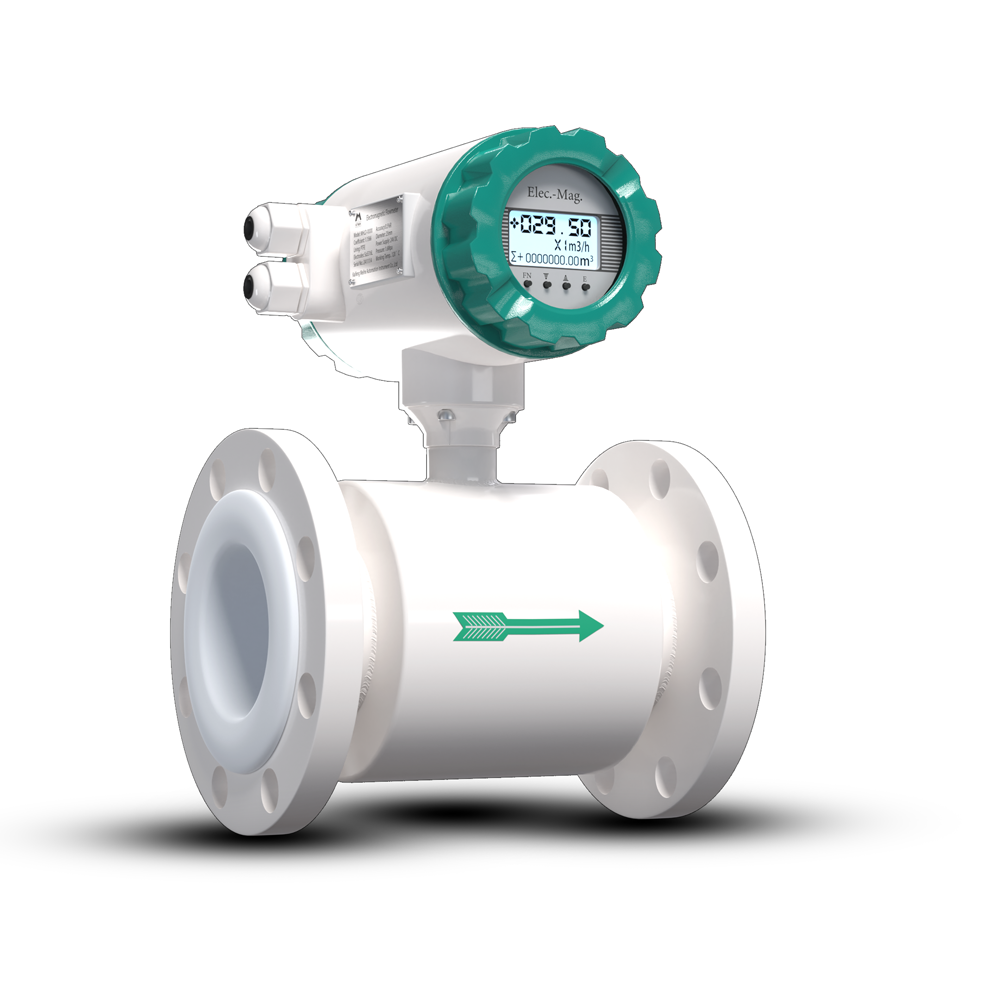
The electromagnetic flow meter (magmeter) has become a trusted solution for engineers and procurement teams worldwide. It uses fundamental electromagnetic physics to deliver stable, repeatable measurements for nearly all conductive fluids, with no moving parts and minimal maintenance requirements.
This article explains how magmeters work, breaks down their core components, highlights their key advantages, and covers the industrial sectors where they deliver the most value.
The Science Behind the Meter: How Magmeters Work
Faraday’s Law of Electromagnetic Induction
Magmeters operate strictly according to Faraday’s Law of Electromagnetic Induction. The law states:
When an electrical conductor moves through a magnetic field, it induces a voltage proportional to its velocity.
In a magmeter:
- The conductive fluid acts as the moving conductor.
- The meter’s coils generate a stable magnetic field across the flow tube.
- As fluid flows, charged particles cut the magnetic field lines and produce a measurable voltage.
- This voltage is directly proportional to flow velocity and, therefore, to volumetric flow rate.
The basic formula is:
E = k × B × D × v
- E = induced voltage
- k = meter constant
- B = magnetic field strength
- D = distance between electrodes (pipe diameter)
- v = average fluid velocity
Core Components of an Electromagnetic Flow Meter
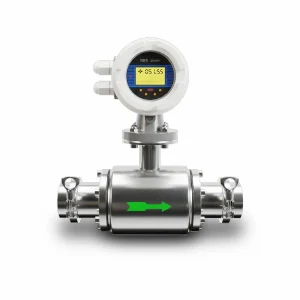
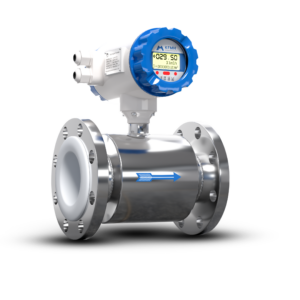
A complete magmeter system includes four key parts that work together to measure and output flow data:
- Flow TubeThe main pipeline section where fluid passes. It is lined with insulating, chemical-resistant materials such as PTFE, PFA, hard rubber, or polyurethane to prevent electrical shorting and protect against corrosion or abrasion.
- Excitation CoilsMounted outside the flow tube, these coils generate a consistent, controlled magnetic field. Most modern magmeters use low‑frequency pulsed DC excitation for stable zero points and low noise.
- ElectrodesPositioned perpendicular to both the flow direction and the magnetic field, electrodes detect the induced voltage. Materials range from stainless steel to Hastelloy, tantalum, or platinum for aggressive media.
- TransmitterReceives the low-level voltage signal from the electrodes, amplifies, filters, and digitizes it, then converts it into standard outputs such as 4–20 mA, pulse, or digital communications for PLCs and SCADA systems.
Key Advantages of Electromagnetic Flow Meters
Magmeters stand out because their design solves many pain points of mechanical and differential-pressure meters:
- Zero Pressure DropFull-bore, unobstructed flow path means no additional pumping energy and no backpressure buildup—ideal for gravity systems and large pipelines.
- No Moving PartsEliminates wear, breakage, and lubrication needs. Extremely low maintenance and long service life.
- Linear Signal & High AccuracyVoltage is directly proportional to velocity, providing a linear output. Typical accuracy: ±0.2% to ±0.5% of measured value.
- Wide RangeabilityHigh turndown ratios (often 100:1 or higher) allow accurate measurement across very low to very high flow rates in the same meter.
- Insensitive to Density, Viscosity, & TemperatureWorks reliably for slurries, sludges, oils with water cut, and high‑temperature fluids without compensation.
- Bi‑Directional MeasurementEasily measures forward and reverse flow, useful in loading/unloading, batch processes, and reverse‑flush systems.
- Handles Solids & AbrasivesPerfect for ore slurries, sand–water mixtures, sludge, and pulp—no clogging, minimal abrasion wear.
Industry-Specific Applications: Where Magmeters Shine
Electromagnetic flow meters are versatile and excel where other technologies fail. Below are their most impactful use cases.
Water & Wastewater Treatment
- Raw water intake & distribution
- Wastewater influent/effluent
- Sludge, slurry, and mixed liquor
- Chemical dosing (flocculants, pH adjusters)
- Leak detection & revenue metering
Magmeters are the standard in water utilities because they handle dirty fluids, have no pressure loss, and require little maintenance in remote or unmanned sites.
Chemical & Petrochemical Processing
- Acids, alkalis, electrolytes, and brines
- Corrosive solvent streams
- Batch dosing & reaction control
- Cooling water & heat exchanger circuits
- Wastewater & compliance discharge
Material selection for liners and electrodes lets magmeters survive highly corrosive environments where metal sensors quickly fail.
Mining & Mineral Processing
- Ore slurries, sand, gravel, and tailings
- Process water circulation
- Concentrate transport
- Dredge flow measurement
Abrasion‑resistant liners (polyurethane, ceramic) withstand heavy solids without degradation or loss of accuracy.
Power Generation
- Cooling water circuits (thermal & nuclear)
- Flue Gas Desulfurization (FGD) slurries
- Boiler feedwater control
- Wastewater & ash handling systems
Stable, low‑drift measurement supports plant efficiency and emissions compliance.
Pharmaceutical & Biotechnology
- Purified Water (PW) & Water for Injection (WFI)
- CIP/SIP flow monitoring
- Hygienic ingredient dosing
- Batch control & regulatory reporting
Sanitary, crevice‑free designs with FDA/EHEDG‑compliant materials ensure sterile, traceable measurement.
Food & Beverage
- Milk, juices, syrups, and edible oils
- CIP cleaning solutions
- Additive dosing
- Yeast and fermentation broths
Hygienic models support 3A and EHEDG standards with smooth, cleanable liners and no dead legs.
Pulp & Paper
- Black liquor, white liquor
- Pulp slurries
- Process water & effluent
- Coating and additive flows
Handles fibrous, abrasive, and high‑solids fluids without plugging.
Conclusion
Electromagnetic flow meters turn Faraday’s basic law into a rugged, high‑performance industrial tool. Their lack of moving parts, zero pressure loss, wide measurement range, and compatibility with harsh fluids make them irreplaceable in water, chemical, mining, power, pharma, and food applications.
Even the best magmeter will underperform if sized, grounded, or installed incorrectly. Proper selection of liner, electrode material, excitation type, and transmitter configuration is essential for long‑term reliability.
In future articles, we will cover magmeter selection criteria, installation best practices, grounding, and troubleshooting to help you achieve accurate, maintenance‑free flow measurement in your process.
Geng, Tina
Sales manager
Thank you for reading our technical insights and industry news.