12 Flow Meter Types and Their Advantages and Disadvantages

1. Magnetic Flow Meters (Magmeters)
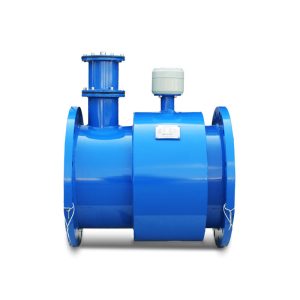
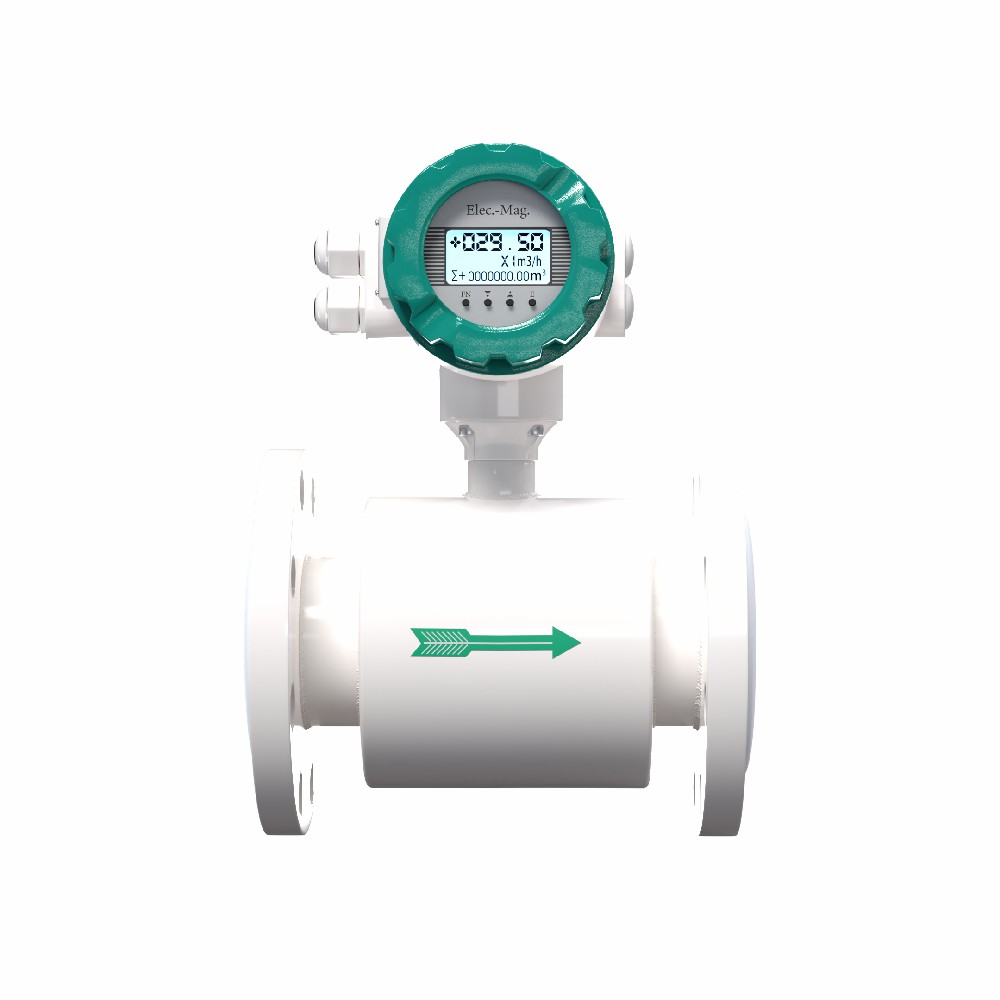
Magnetic flow meters use Faraday’s Law of Electromagnetic Induction to measure the velocity of conductive liquids. They feature no moving parts and offer an unobstructed flow path.
- Advantages:
- No pressure drop across the meter.
- Highly accurate and excellent for dirty liquids, slurries, and wastewater.
- Requires minimal maintenance due to no moving parts.
- Disadvantages:
- Only works with conductive fluids (cannot measure hydrocarbons, distilled water, or gases).
- Can be bulky and expensive in larger pipe sizes.
2. Coriolis Mass Flow Meters
Coriolis meters measure mass flow directly by passing fluid through vibrating tubes. The fluid’s inertia causes a twisting motion (the Coriolis effect) proportional to the mass flow rate.
- Advantages:
- Provides direct mass flow measurement (highly accurate).
- Can measure liquids, gases, and slurries regardless of temperature or pressure changes.
- Simultaneously measures density and temperature.
- Disadvantages:
- High initial purchase cost.
- Can cause a noticeable pressure drop.
- Sensitive to external vibrations in some installations.
3. Ultrasonic Flow Meters
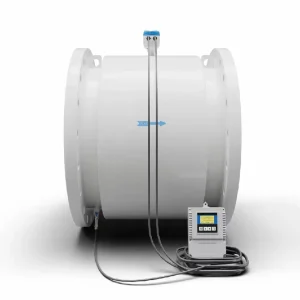
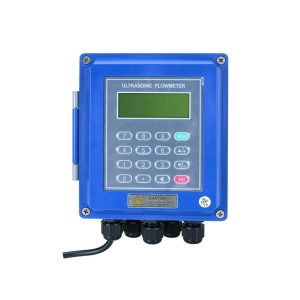
Ultrasonic meters use sound waves to determine the velocity of a fluid. They typically come in two distinct types: Transit-time and Doppler. [Internal Link: Compare Transit-time vs. Doppler technologies]
- Advantages:
- Clamp-on models allow for non-invasive measurement (no pipe cutting required).
- No pressure drop and no moving parts.
- Ideal for highly corrosive or toxic fluids.
- Disadvantages:
- Transit-time meters require clean fluids; Doppler meters require particulates or bubbles.
- Accuracy can be affected by pipe wall buildup or poor acoustic coupling.
4. Vortex Flow Meters
Vortex meters place a “bluff body” in the flow stream, which causes alternating vortices to form downstream. The frequency of these vortices is directly proportional to the fluid’s velocity.
- Advantages:
- Versatile: can measure liquids, gases, and steam.
- Low maintenance with no moving parts.
- Relatively low initial cost compared to Coriolis meters.
- Disadvantages:
- Not suitable for very low flow rates (vortices will not form).
- Creates a permanent pressure drop.
5. Turbine Flow Meters
Turbine flow meters contain a multi-bladed rotor mounted at right angles to the flow. As fluid passes, it spins the rotor at a speed proportional to the fluid velocity.
- Advantages:
- Extremely high accuracy and repeatability.
- Excellent for clean, low-viscosity liquids and gases (e.g., aerospace and custody transfer).
- Fast response time.
- Disadvantages:
- Moving parts are subject to wear and tear.
- Fluid must be exceptionally clean; debris will damage the rotor.
- Not suitable for high-viscosity fluids.
6. Positive Displacement (PD) Flow Meters
PD meters capture a specific volume of fluid in a mechanical chamber and count the number of times the chamber fills and empties. [Internal Link: Browse our PD meter catalog]
- Advantages:
- The best choice for highly viscous fluids (e.g., oils, syrups).
- High accuracy and excellent turndown ratio.
- Does not require straight pipe runs upstream or downstream.
- Disadvantages:
- Prone to mechanical wear and requires regular maintenance.
- Causes a high pressure drop.
- Susceptible to damage from trapped air or gases in the liquid.
7. Differential Pressure (DP) Flow Meters
DP meters (including orifice plates, venturi tubes, and flow nozzles) introduce a constriction in the pipe and measure the pressure difference before and after the restriction.
- Advantages:
- One of the most widely understood and universally accepted technologies.
- Relatively inexpensive and easy to install.
- Works well for extreme temperatures and pressures.
- Disadvantages:
- Creates a permanent system pressure drop, increasing energy costs.
- Accuracy degrades as the orifice plate edges wear down over time.
- Limited turndown ratio (usually 3:1 or 4:1).
8. Thermal Mass Flow Meters
These meters introduce heat into the flow stream and measure how much heat dissipates. The rate of heat loss is proportional to the mass flow rate.
- Advantages:
- Excellent for measuring low-pressure and low-velocity gases.
- Direct mass flow measurement without needing separate temperature or pressure compensation.
- No moving parts.
- Disadvantages:
- Moisture or condensation on the sensor can cause significant errors.
- Primarily limited to gas applications.
9. Variable Area Flow Meters (Rotameters)
A rotameter consists of a tapered vertical tube containing a float. As fluid flows upward, it pushes the float up until the upward force equals the weight of the float.
- Advantages:
- Very low cost and simple to read locally.
- Requires no external power (ideal for remote locations).
- Good for purging applications and simple visual flow indication.
- Disadvantages:
- Must be installed strictly vertically.
- Generally lower accuracy compared to electronic meters.
- Difficult to integrate into automated control systems (though electronic output versions exist).
10. Target Flow Meters
Target meters feature a disc (the “target”) suspended in the flow stream. The force exerted by the fluid on the target is measured and converted into a flow rate.
- Advantages:
- Excellent for heavy slurries, particulate-laden fluids, and high-temperature steam.
- Rugged design with a high tolerance for extreme conditions.
- Disadvantages:
- Creates a pressure drop.
- Calibration can be challenging, and the target mechanism can degrade over time in highly abrasive fluids.
11. Pitot Tube Flow Meters
Widely used in aviation and HVAC, pitot tubes measure the difference between the static pressure and the dynamic pressure of a fluid flow to calculate velocity. [Internal Link: Read our case study on HVAC optimization]
- Advantages:
- Extremely low cost and simple installation.
- Creates very little pressure drop.
- Can be inserted into very large pipes or ducts.
- Disadvantages:
- Only measures velocity at a single point (requires traversing the pipe for an accurate average profile).
- Easily clogged by particulates.
- Poor accuracy at low flow rates.
12. Open Channel Flow Meters (Weirs and Flumes)
Used for rivers, irrigation channels, and wastewater treatment, these meters use hydraulic structures (weirs or flumes) to restrict flow, then measure the liquid level to calculate the flow rate.
- Advantages:
- The only viable solution for free-surface, unpressurized flows.
- Can handle massive volumes of water and heavy debris.
- Disadvantages:
- Requires significant civil engineering and construction to install the weir/flume.
- Requires regular cleaning and maintenance to remove settled debris.
Conclusion
There is no “one size fits all” flow meter. Magnetic and Coriolis meters offer incredible accuracy but come with specific fluid and budget constraints. Conversely, DP and Variable Area meters provide reliable, cost-effective solutions for straightforward applications.
admin
System Administrator
Thank you for reading our technical insights and industry news.